
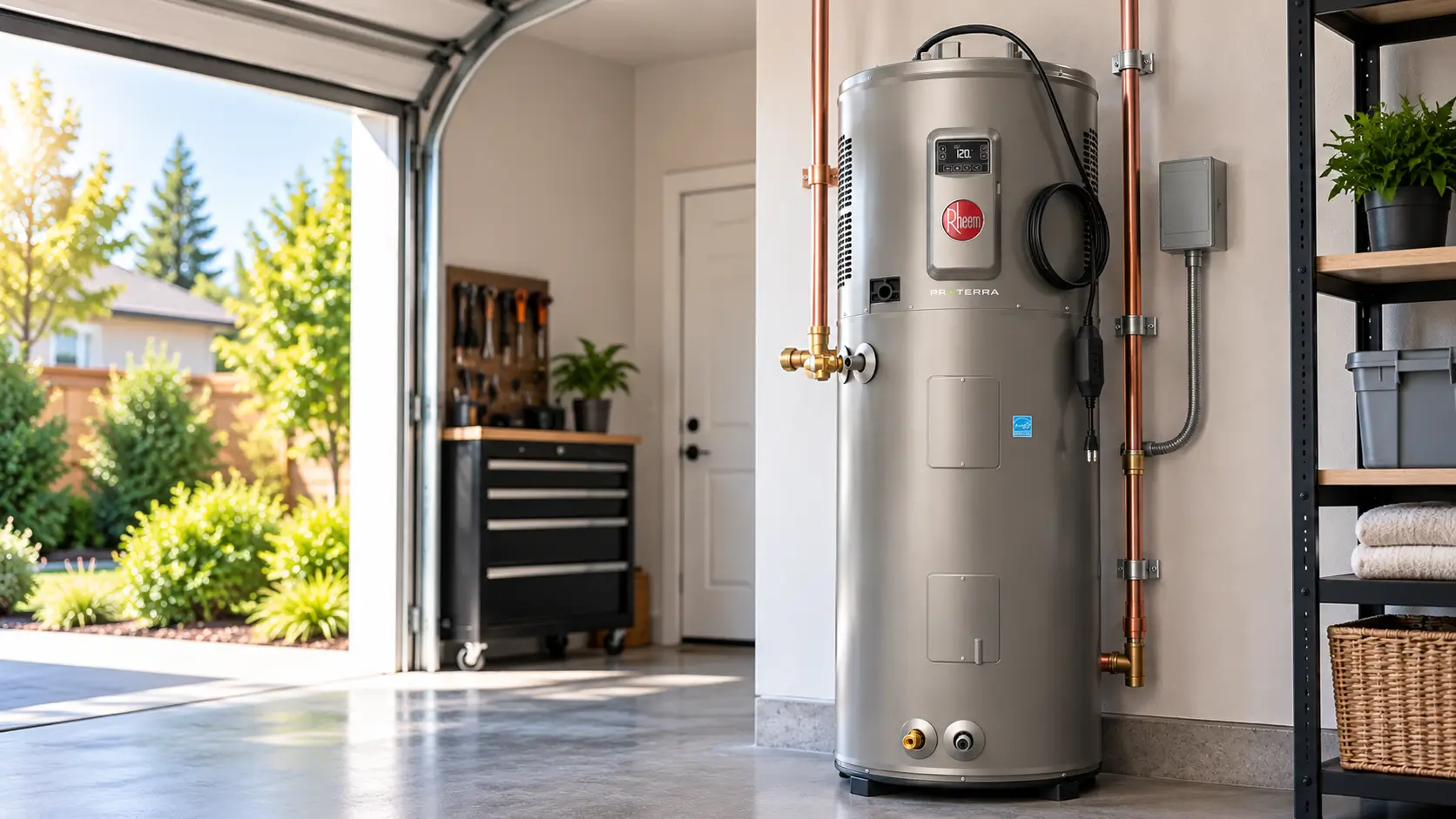
Is It Worth Getting a Heat Pump Water Heater?
If you’re replacing an aging water heater or looking for ways to reduce your home’s energy consumption, you may be wondering: Is it worth getting a heat pump water heater? For many San Francisco Bay Area homeowners, the answer can be yes—particularly when replacing a conventional electric water heater. Heat pump water heaters use electricity to move heat from the surrounding air into the water rather than generating all their heat directly through electric resistance. This makes them significantly more energy efficient than traditional electric models.
However, a heat pump water heater isn’t automatically the right choice for every property. Upfront installation cost, available space, electrical requirements, household hot-water demand, noise, and the installation location should all be considered. Sequoia Plumbing & Mechanical provides professional heat pump water heater installation throughout the San Francisco Bay Area. Call (650) 880-6339 or book your heat pump water heater installation online.
What Is a Heat Pump Water Heater?
A heat pump water heater, sometimes called a hybrid water heater, works somewhat like a refrigerator in reverse. Instead of using electricity primarily to create heat, it captures heat from the surrounding air and transfers that energy into the water stored in its tank. Many models also include conventional electric resistance heating elements that can provide additional heating during periods of high hot-water demand. This combination can provide the familiar convenience of a storage water heater while using considerably less electricity.
Is a Heat Pump Water Heater Worth It?
A heat pump water heater can be particularly worthwhile when you:
- Currently have a standard electric water heater
- Want to reduce household electricity consumption
- Plan to stay in your home long enough to benefit from operating-cost savings
- Have a garage, utility room, basement, or another appropriate installation location
- Are planning to electrify your home
- Have solar panels or are considering solar
- Qualify for applicable rebates or incentives
- Need to replace an aging water heater anyway
ENERGY STAR reports that certified heat pump water heaters use about 70% less energy than standard electric water heaters. Its current estimates indicate that a household of four could save approximately $550 per year compared with a standard electric model, although actual savings depend heavily on electricity rates, hot-water consumption, equipment, and operating mode.
That makes the comparison especially compelling when replacing an electric-resistance water heater.
7 Reasons a Heat Pump Water Heater May Be Worth It
1. Significantly Lower Energy Consumption
Efficiency is the biggest advantage. Traditional electric water heaters create heat using electric resistance elements. Heat pump water heaters primarily transfer existing heat from the surrounding air. Because moving heat requires less energy than generating it directly, ENERGY STAR-certified models can use substantially less electricity than standard electric water heaters. For homeowners trying to make their property more energy efficient, water heating is therefore an important place to look.
2. Lower Water-Heating Operating Costs
Reduced electricity consumption can translate into lower operating costs. ENERGY STAR estimates that a four-person household could save around $550 annually compared with a standard electric water heater under its stated assumptions. Your actual savings can be higher or lower depending on:
- Local electricity rates
- Number of people in the household
- Hot-water consumption
- Tank size
- Operating mode
- Incoming water temperature
- Installation location
- Efficiency of the water heater being replaced
If you’re switching from natural gas rather than conventional electric resistance, the financial comparison is more property-specific because local gas and electricity rates matter. ENERGY STAR notes that savings relative to natural gas vary according to utility rates.
3. Excellent Efficiency for Bay Area Homes
Heat pump water heaters need access to surrounding air from which they can extract heat. ENERGY STAR recommends paying attention to the installation area’s temperature and available air volume. Its consumer guidance says HPWHs generally perform best in suitable interior spaces and notes that colder environments can reduce efficiency and cause hybrid units to rely more heavily on backup resistance heating.
Common installation locations can include:
- Garages
- Basements
- Utility rooms
- Laundry rooms
- Appropriately designed mechanical spaces
The specific model’s clearance, air-volume, temperature, drainage, and manufacturer requirements should always determine whether a proposed location is suitable.
4. No On-Site Fuel Combustion
An electric heat pump water heater doesn’t burn natural gas or another fuel to heat the water. That means the water heater itself doesn’t produce combustion exhaust or carbon monoxide. ENERGY STAR specifically identifies the elimination of combustion gases as one of the benefits of switching from fuel-fired equipment to a heat pump water heater. This can also make a heat pump water heater attractive to homeowners gradually converting their homes from gas appliances to electric equipment.
5. Smart Controls and Operating Modes
Many modern heat pump water heaters offer multiple operating modes. Depending on the model, these can include:
- Heat pump/efficiency mode
- Hybrid mode
- Electric/resistance mode
- Vacation mode
- Scheduling
- Energy monitoring
- Connected or app-based controls
Hybrid operation can be particularly useful because the system can prioritize efficient heat-pump operation while using electric resistance elements when additional recovery is required.
6. Cooling and Dehumidification Can Be a Bonus
Because the system extracts heat from surrounding air, a heat pump water heater releases cooler, drier air into the surrounding space. In a garage or certain utility spaces, that may be beneficial. ENERGY STAR notes that HPWHs can provide localized cooling and dehumidification while operating. But this characteristic also explains why choosing the installation location matters.
7. Rebates May Improve the Economics
Depending on the property, household, equipment, utility territory, and available programs, incentives may help offset some of the upfront expense of installing qualifying energy-efficient equipment. California incentive programs change over time and have specific eligibility, equipment, contractor, and preapproval requirements. Homeowners should therefore verify currently available incentives before purchasing equipment or beginning installation, rather than assuming a particular rebate will apply.
What Are the Downsides of a Heat Pump Water Heater?
The benefits are significant, but an SEO article answering whether a heat pump water heater is worth it should also address the drawbacks.
Higher Upfront Cost
Heat pump water heaters generally cost more upfront than basic conventional electric storage water heaters. Installation costs can also increase if your home requires:
- Electrical modifications
- A new dedicated circuit
- Plumbing modifications
- Condensate drainage
- Equipment relocation
- Additional installation materials
- Permit-related work
The relevant comparison is therefore total installed cost versus expected long-term operating costs, not equipment price alone.
They Need the Right Installation Space
A heat pump water heater needs adequate surrounding air and appropriate temperatures to operate efficiently. Putting one into a small enclosed closet without addressing the manufacturer’s airflow requirements can reduce performance. That’s one reason professional heat pump water heater installation matters.
They Produce Some Noise
Unlike a basic electric tank, a heat pump water heater contains a compressor and fan. ENERGY STAR says typical sound levels are approximately 45–55 dBA, depending on the model, making placement worth considering if the water heater would be near a bedroom or frequently occupied living space.
They Cool the Surrounding Area
Extracting heat from the air means the unit can cool its immediate surroundings. That may be welcome in a garage but less desirable in certain conditioned living spaces. Proper equipment selection and placement can minimize this issue.
Hot-Water Demand Still Matters
High-efficiency operation doesn’t mean tank size is irrelevant. A household with substantial simultaneous hot-water demand may benefit from a larger tank. ENERGY STAR notes that properly sizing the tank can reduce reliance on less-efficient backup resistance heating and help maintain adequate hot-water delivery.
Heat Pump Water Heater vs. Standard Electric Water Heater
For homeowners currently using a conventional electric-resistance water heater, the efficiency difference can be substantial.
| Feature | Heat Pump Water Heater | Standard Electric Water Heater |
| Primary heating method | Transfers heat from air | Electric resistance |
| Energy efficiency | Very high | Lower |
| Upfront cost | Usually higher | Usually lower |
| Operating cost | Typically lower | Typically higher |
| Installation requirements | More location-dependent | Simpler |
| Noise | Fan/compressor noise | Generally very quiet |
| Smart features | Common on newer models | Model dependent |
| On-site combustion | None | None |
ENERGY STAR states that certified heat pump water heaters can use approximately 70% less energy than standard electric water heaters, making an electric-to-heat-pump replacement one of the clearest situations where an HPWH deserves consideration.
Heat Pump Water Heater vs. Gas Water Heater
This comparison is more complicated. A heat pump water heater can be considerably more energy efficient, but whether it costs less to operate than a gas water heater depends on local electricity and gas prices, equipment efficiency, household consumption, and available utility rate plans. ENERGY STAR specifically notes that operating-cost savings relative to natural gas depend on local utility rates.
Converting from gas can also require electrical work, which increases the initial project cost. For a Bay Area homeowner replacing gas equipment, it makes sense to compare:
Current gas costs + replacement cost
against:
Electricity costs + HPWH installation cost + potential incentives + expected long-term energy use.
That provides a much more useful answer than comparing the purchase prices of two water heaters.
How Long Does a Heat Pump Water Heater Last?
Heat pump water heaters have service lives broadly comparable to conventional electric storage water heaters. ENERGY STAR notes that current systems have similar lifespans to electric storage units and that many models carry approximately 10-year warranties. Actual lifespan depends on factors such as equipment quality, installation, water conditions, maintenance, and usage.
How Much Can a Heat Pump Water Heater Save?
There isn’t one savings figure that applies to every household.
ENERGY STAR’s current example for a four-person household estimates approximately $550 in annual electricity savings and more than $5,600 over the unit’s lifetime compared with a standard electric water heater, using the assumptions in its analysis. Households with different utility rates or water usage will see different results.
That’s why homeowners should be cautious with claims such as “a heat pump water heater will pay for itself in exactly X years.” The payback period depends on the additional upfront cost and the actual annual savings.
When Is a Heat Pump Water Heater Probably Most Worth It?
The strongest case is often a homeowner who:
Already needs a new water heater + currently uses electric resistance + has an appropriate installation location + expects to remain in the home + can take advantage of available incentives.
In that situation, you’re already facing the cost of replacing a water heater, so the meaningful financial question becomes how much more the heat pump system costs upfront and whether its energy savings can recover that difference over time.
When Might It Not Be the Best Choice?
A heat pump water heater may be less attractive when:
- There isn’t an appropriate installation location
- Required electrical upgrades make conversion unusually expensive
- The unit would have to be installed close to a noise-sensitive room
- Available space can’t satisfy the selected model’s requirements
- Your household needs a different hot-water configuration
- You’re replacing an efficient system and projected operating savings are relatively small
The right answer depends on the property rather than the technology alone.
Is a Heat Pump Water Heater Worth It in the San Francisco Bay Area?
For many Bay Area homeowners—especially those replacing a conventional electric water heater—a heat pump water heater can be a compelling upgrade because of its substantially lower electricity consumption. But the best decision should account for your existing water heater, utility costs, household hot-water demand, available space, electrical system, installation costs, and any incentives for which the project actually qualifies. Sequoia Plumbing & Mechanical can evaluate these factors and determine whether a heat pump water heater makes sense for your property.
Professional Heat Pump Water Heater Installation
Correct installation is essential for getting the efficiency and performance you expect from a heat pump water heater. Sequoia Plumbing & Mechanical provides professional heat pump water heater installation in the San Francisco Bay Area.
Our team can evaluate:
- Your existing water heater
- Household hot-water demand
- Recommended tank capacity
- Installation location
- Airflow and clearance requirements
- Electrical requirements
- Plumbing modifications
- Condensate drainage
- Replacement requirements
Call (650) 880-6339 or book your heat pump water heater installation online.
Frequently Asked Questions
Is it worth getting a heat pump water heater?
For many homeowners, particularly those replacing a conventional electric water heater, yes, a heat pump water heater can be worth considering. ENERGY STAR-certified models can use about 70% less energy than standard electric water heaters, although actual financial savings depend on energy rates, household usage, equipment, and installation costs.
What is the main disadvantage of a heat pump water heater?
The main disadvantages are typically higher upfront cost and more specific installation requirements. Heat pump water heaters also produce some fan and compressor noise and cool the surrounding space while operating.
Do heat pump water heaters really save money?
They can, particularly compared with conventional electric resistance water heaters. ENERGY STAR estimates about $550 per year for a household of four under its current assumptions. Actual household savings will vary.
Are heat pump water heaters good for garages?
Garages can be suitable locations because they may provide ample air volume and keep operational noise away from living areas. However, temperature, clearance, air-volume, condensate, electrical, and manufacturer requirements must still be evaluated for the specific installation.
Do heat pump water heaters run out of hot water?
Like other storage water heaters, they can exhaust the stored hot water during periods of unusually high demand. Many hybrid models use backup electric resistance heating when additional recovery is needed. Correct tank sizing is important for balancing hot-water availability and efficiency.
Should I replace my gas water heater with a heat pump water heater?
It can make sense, but the economics are more property-specific than replacing a standard electric water heater. Compare installation and electrical-upgrade costs, local electricity and gas rates, expected usage, and available incentives before deciding.
How do I know if my home is ready for a heat pump water heater?
A professional assessment can determine whether your installation location, electrical supply, plumbing, condensate drainage, available space, and household hot-water demand are suitable. For a Bay Area evaluation, call Sequoia Plumbing & Mechanical at (650) 880-6339 or schedule online.